


The cookie banner
built for Shopware.
Manage consent on Shopware with Velo. Bring your banner, consent records, scan findings and AI cookie categorisation into one workspace.
Free for one site and 1,500 monthly sessions. Pro from €7 a month, plus VAT, for unlimited sites.
What Velo does
on Shopware.
Add the tag to your storefront's base template and recompile the theme, or skip theme work entirely and install through Google Tag Manager. Either way, the consent defaults are set before your other scripts run.
Shopware · storefront template
{% sw_extends '@Storefront/storefront/base.html.twig' %}
{% block base_head %}
  {# Paste the complete Velo snippet from your dashboard here. #}
  {{ parent() }}
{% endblock %}Configuration reference checked against the platform documentation. This is not an admin screenshot.
Platform documentation ↗How it goes live
on Shopware.
Three steps. Most installs take a few minutes when you can already publish changes to the site.
-
01
Add the tag
Add the Velo snippet to your storefront template and clear the cache, or add the Velo template in Google Tag Manager and leave the theme alone.
Shopware · storefront template
{% sw_extends '@Storefront/storefront/base.html.twig' %}
{% block base_head %}
  {# Paste the complete Velo snippet from your dashboard here. #}
  {{ parent() }}
{% endblock %}
Verified configuration reference · 23 September 2026 Configuration reference checked against the platform documentation. This is not an admin screenshot.
Platform documentation ↗ -
02
Denied by default, banner up
Velo sets the Google Consent Mode v2 defaults before your other tags run, denied where your region settings ask for opt in, then shows the banner. Google tags adjust to the choice and tags you gate on Velo's consent event wait for it. Every choice is saved to your consent records.
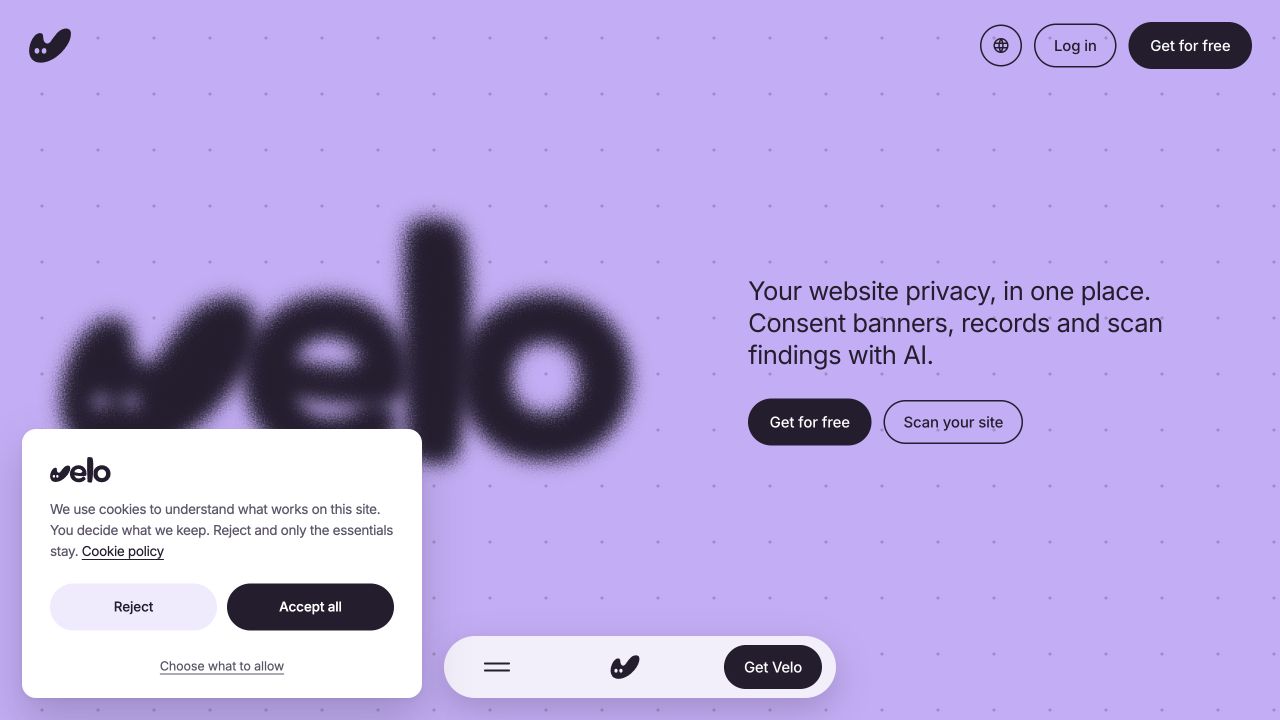
Live interface capture · 23 September 2026 The real banner on veloconsent.com, captured on 23 September 2026. Your banner’s copy, layout and region settings may differ.
Velo live site ↗View full size ↗ -
03
Verify, then publish
Check that the consent signals change in Tag Assistant when you accept and when you reject, then publish. Run the same check again whenever you change your tags or banner settings.
Using a different platform? See every supported platform.
Shopware questions,
answered.
What teams putting a banner on Shopware ask first.
Does Velo fit German market GDPR practice?
Velo covers the common banner requirements: Reject as easy as Accept, per category choices, consent defaults set before your tags, and a record of every choice. Tags outside Consent Mode need gating too. Whether the store complies depends on the whole setup, so review it with your data protection adviser.
Theme template or Google Tag Manager: which install?
If the store already runs Google Tag Manager, use the Velo CMP template: no theme changes, no recompile, and the whole measurement stack stays reviewable in one place. The template edit is there for stores that keep everything server rendered.
What does Consent Mode v2 do on a strict setup?
Google tags adjust to each choice. In advanced mode, declined visitors can still send cookieless pings, and ads_data_redaction removes ad click identifiers from those requests for the strictest EU setups. Google may model some conversions when its eligibility and traffic conditions are met, with no guarantee.
Will the banner slow the storefront down?
The script stays at or under 30KB and does not block rendering. Shopware's caching keeps doing its job; the banner arrives after the page paints.
From the journal.
Website privacy, in one place.
Scan your site →