


The cookie banner
built for Drupal.
Manage consent on Drupal with Velo. Bring your banner, consent records, scan findings and AI cookie categorisation into one workspace.
Free for one site and 1,500 monthly sessions. Pro from €7 a month, plus VAT, for unlimited sites.
What Velo does
on Drupal.
Add the tag to your theme's html template and clear caches, or keep the theme untouched and install through Google Tag Manager. No contributed module, no dependency updates, no patch schedule. It is one script tag, wherever you prefer to own it.
Drupal · theme template
{# In your custom theme’s html.html.twig #}
<head>
  {# Paste the complete Velo snippet from your dashboard here. #}
  {# Keep the existing head placeholders and theme markup. #}
</head>Configuration reference checked against the platform documentation. This is not an admin screenshot.
Platform documentation ↗How it goes live
on Drupal.
Three steps. Most installs take a few minutes when you can already publish changes to the site.
-
01
Add the tag
Add the Velo snippet to your theme's html template and clear caches. Or add the Velo template in Google Tag Manager and leave the theme alone.
Drupal · theme template
{# In your custom theme’s html.html.twig #}
<head>
  {# Paste the complete Velo snippet from your dashboard here. #}
  {# Keep the existing head placeholders and theme markup. #}
</head>
Verified configuration reference · 23 September 2026 Configuration reference checked against the platform documentation. This is not an admin screenshot.
Platform documentation ↗ -
02
Denied by default, banner up
Velo sets the Google Consent Mode v2 defaults before your other tags run, denied where your region settings ask for opt in, then shows the banner. Google tags adjust to the choice and tags you gate on Velo's consent event wait for it. Every choice is saved to your consent records.
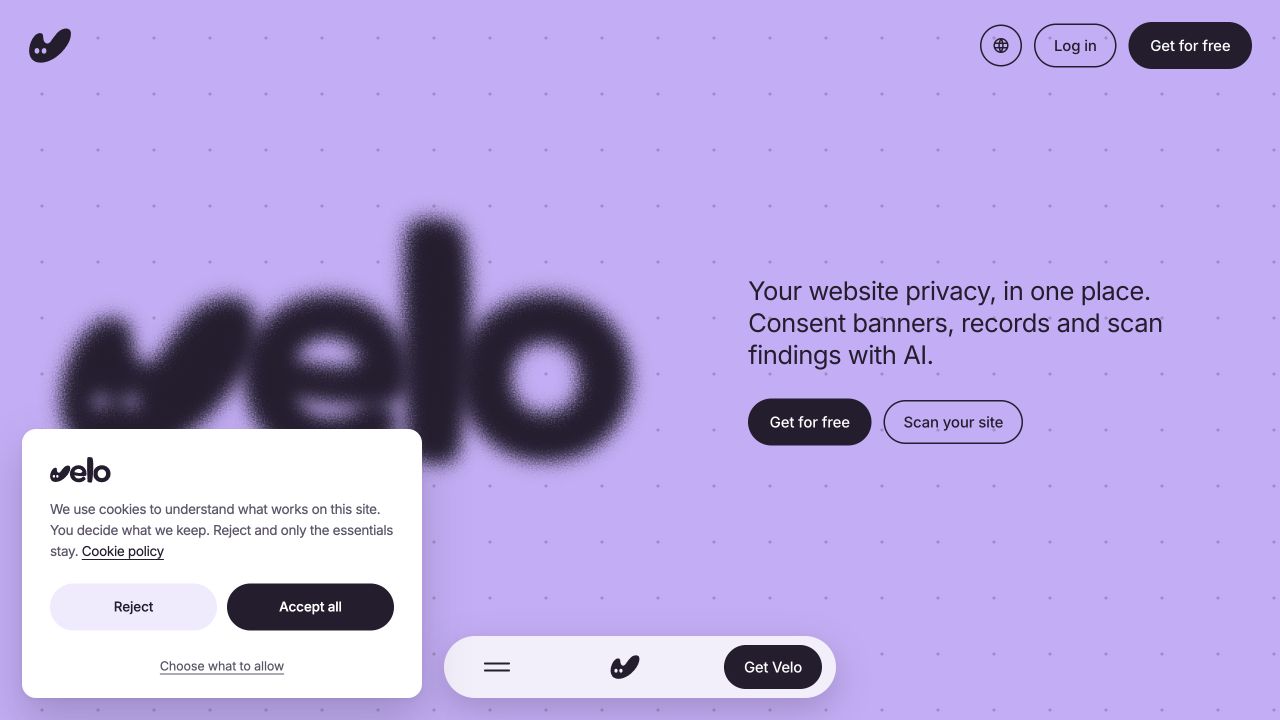
Live interface capture · 23 September 2026 The real banner on veloconsent.com, captured on 23 September 2026. Your banner’s copy, layout and region settings may differ.
Velo live site ↗View full size ↗ -
03
Verify, then publish
Check that the consent signals change in Tag Assistant when you accept and when you reject, then publish. Run the same check again whenever you change your tags or banner settings.
Using a different platform? See every supported platform.
Drupal questions,
answered.
What teams putting a banner on Drupal ask first.
Why not a Drupal consent module?
A module is one more dependency to update through every core upgrade. Velo is a script tag: it lives in your theme or your tag container, upgrades centrally on our side, and touches nothing in your Drupal codebase.
Does it satisfy a formal GDPR review?
It covers what a review checks on the banner: Reject as accessible as Accept, per category choices, consent defaults set before your tags, and consent records you can export. The review will also look at your tags and your privacy notice, which stay your responsibility.
How does it behave behind caching and a CDN?
The banner is client side and consent is evaluated per visitor in the browser, so full page caching keeps working. Nothing about the install depends on Drupal's render pipeline.
What does Consent Mode v2 add for our analytics?
It passes each visitor's choice to GA4 and Google Ads, which Google expects for visitors in the EEA, and the tags adjust to it. Google may model some conversions from declined visitors when its eligibility and traffic conditions are met. There is no guarantee it will.
From the journal.
Website privacy, in one place.
Scan your site →